Showing posts with label #edtech. Show all posts

Saturday, February 10, 2018

The Balance of Tech and Paper


When I started working at Westlake Charter School at the beginning of last year, I was excited about the types of lessons I would be able to construct because all of my students had access to a Chromebook every day, all day. That wasn’t the norm for schools in the area at the time, but I was very comfortable ready to jump into that world.

I started out having them do almost everything on their Chromebook. Tests, reading passages, taking notes, making images, etc… But I had one student who would request to do all of her writing with pencil and paper. She would ask me to print out each assignment, and she knew exactly how she needed it to look in order to make it work for her. She would set it all up on her computer, with the right amount of space entered in, so that when I printed it, she could easily do the same work on her paper.

On writing assignments I would have students occasionally ask if they could write it out on binder paper instead of typing it. I wasn’t opposed to having 2-3 students do that every time. I also had several parents question the use of tech, commenting that it was harder to keep up with what was going on in the classroom with no papers coming home.

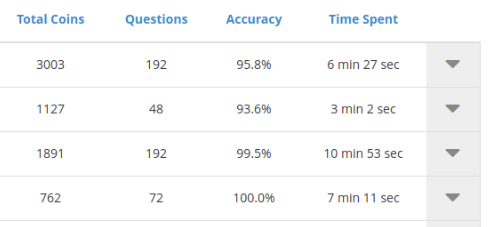
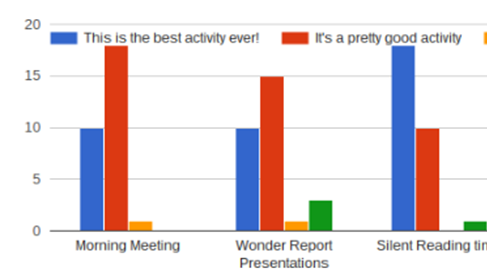
When I asked for student feedback half-way through the year, I got this:
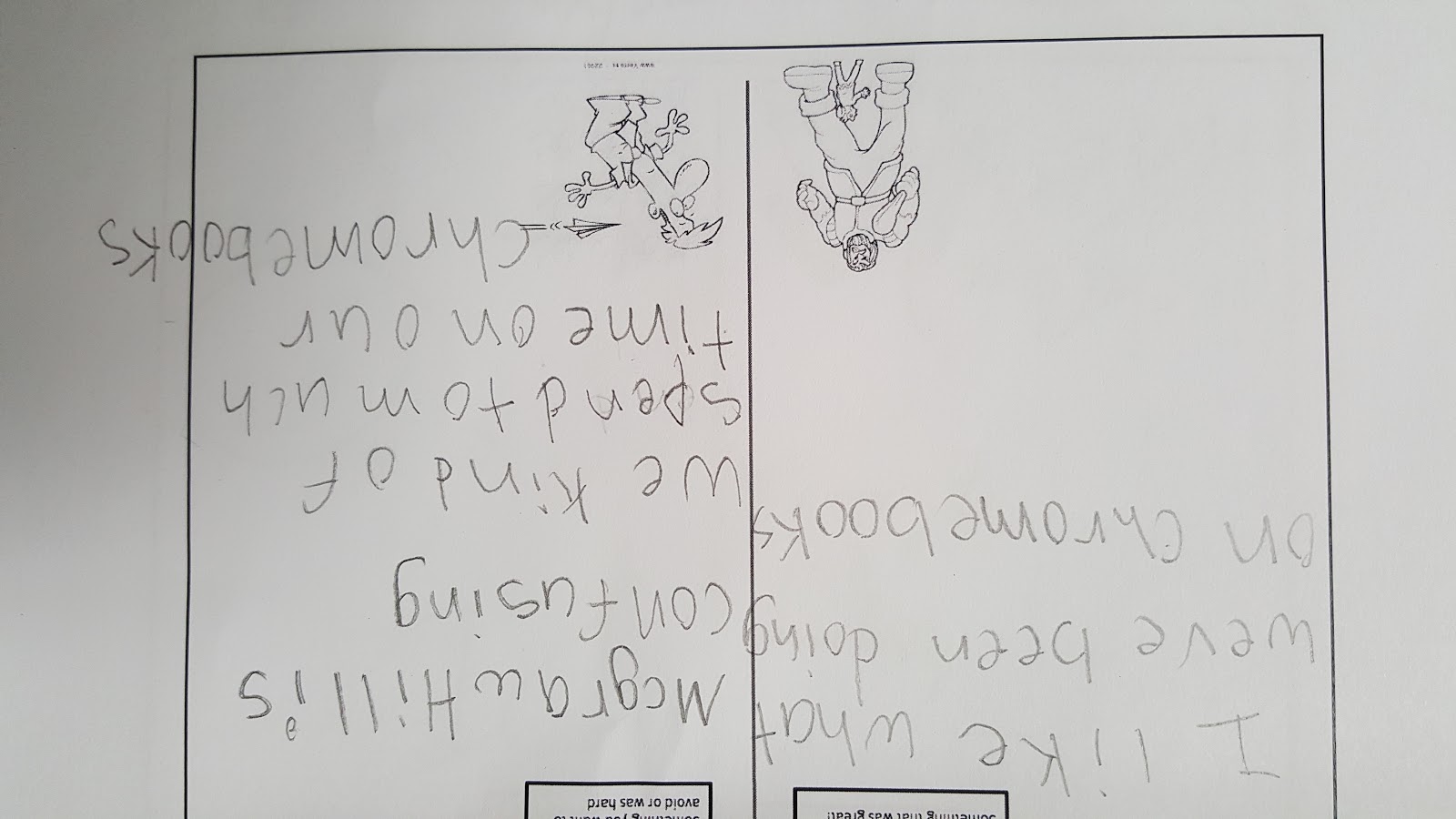

So, while some students loved the tech, others didn’t, and I started questioning more deeply when to use it, and when to provide a paper option. I’ve been a lot more deliberate about the mix of tools this year, and have offered students more choice between mediums when appropriate.

As an example, we are studying NGSS.5-PS3-1: Use models to describe that energy in animals’ food (used for body repair, growth, motion, and to maintain body warmth) was once energy from the sun.

Students have been taking notes from Safari Live guides on the ecosystem of a game preserve in South Africa.
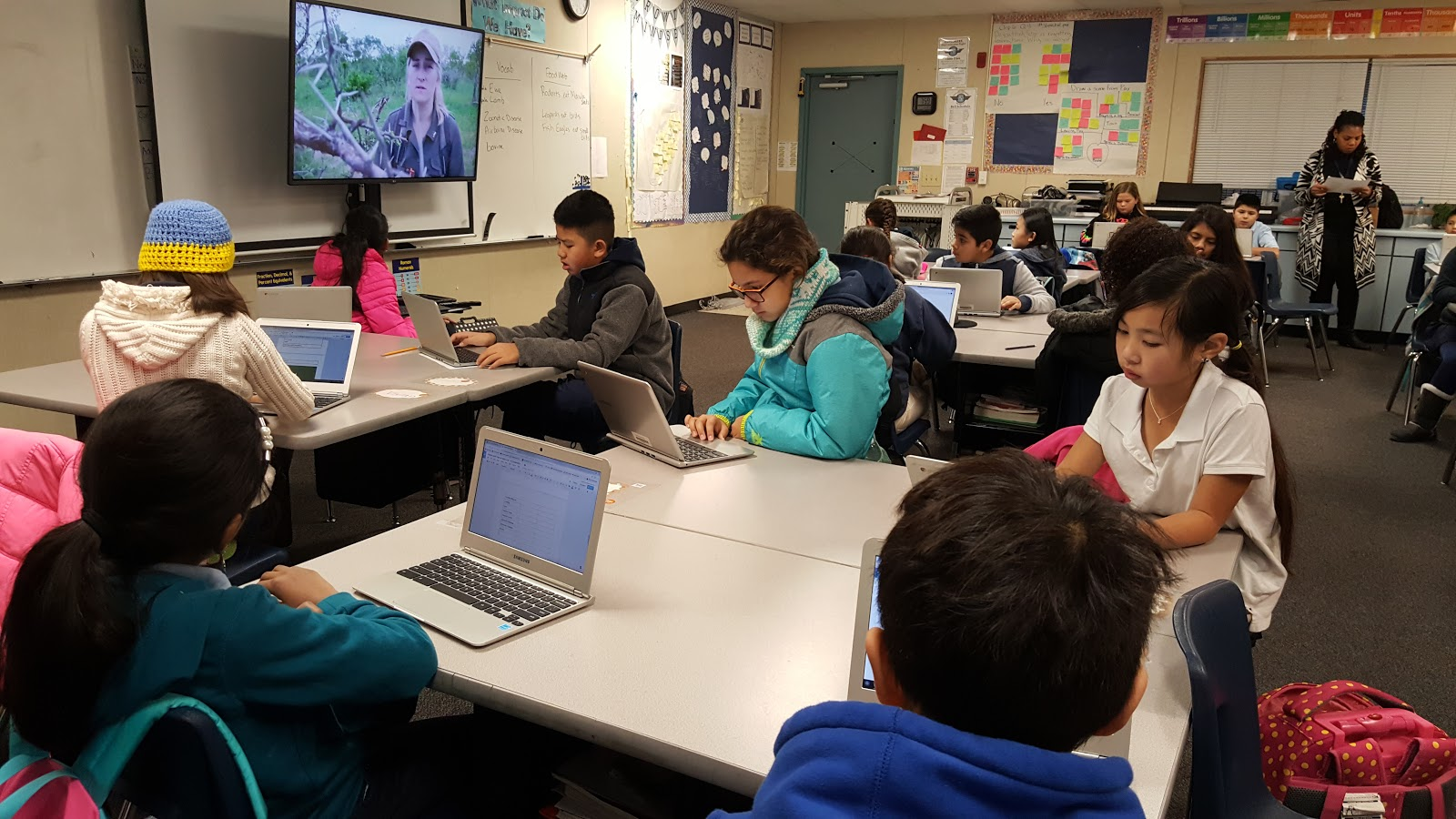
They do this fully on a Google Doc, individually.


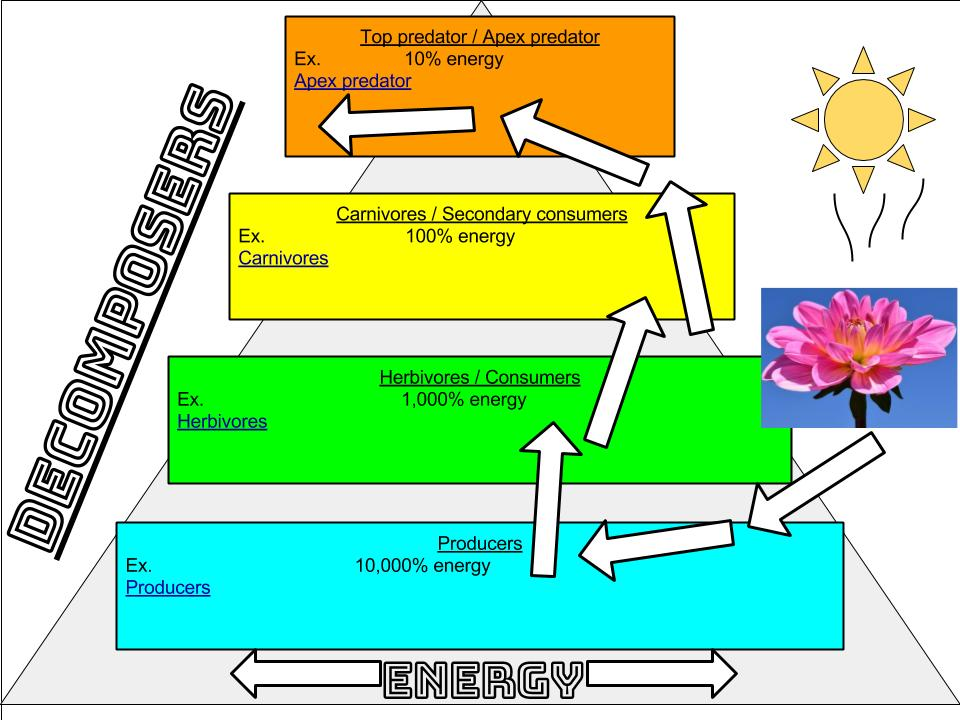
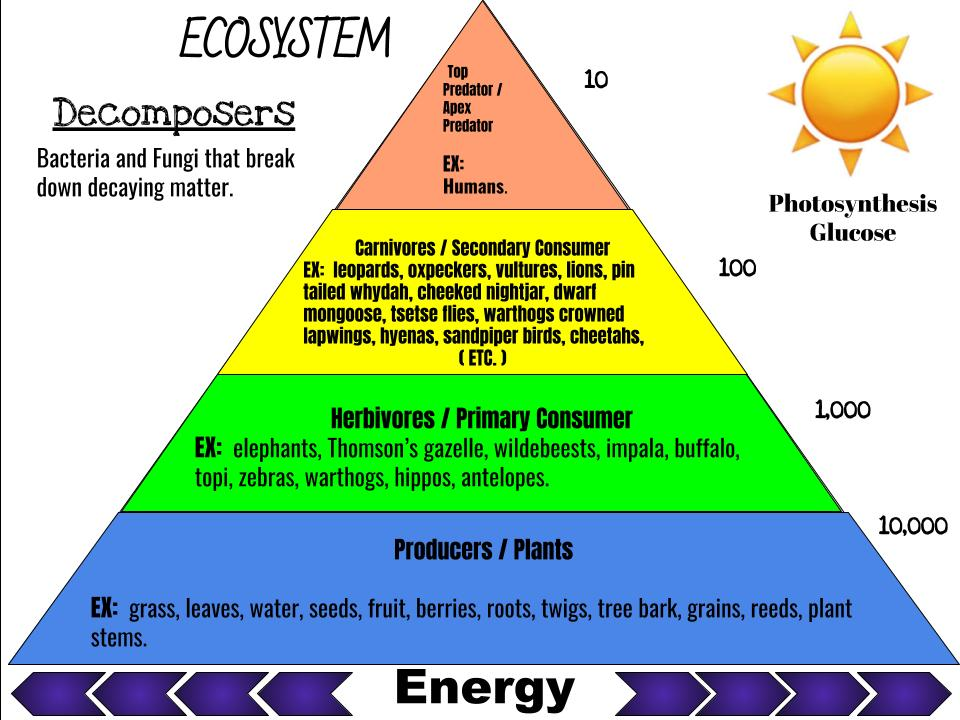
Next I wanted to make sure that students understood the importance of the sun and the producers within the whole system. I printed them all a paper copy of this infographic and handed it out.
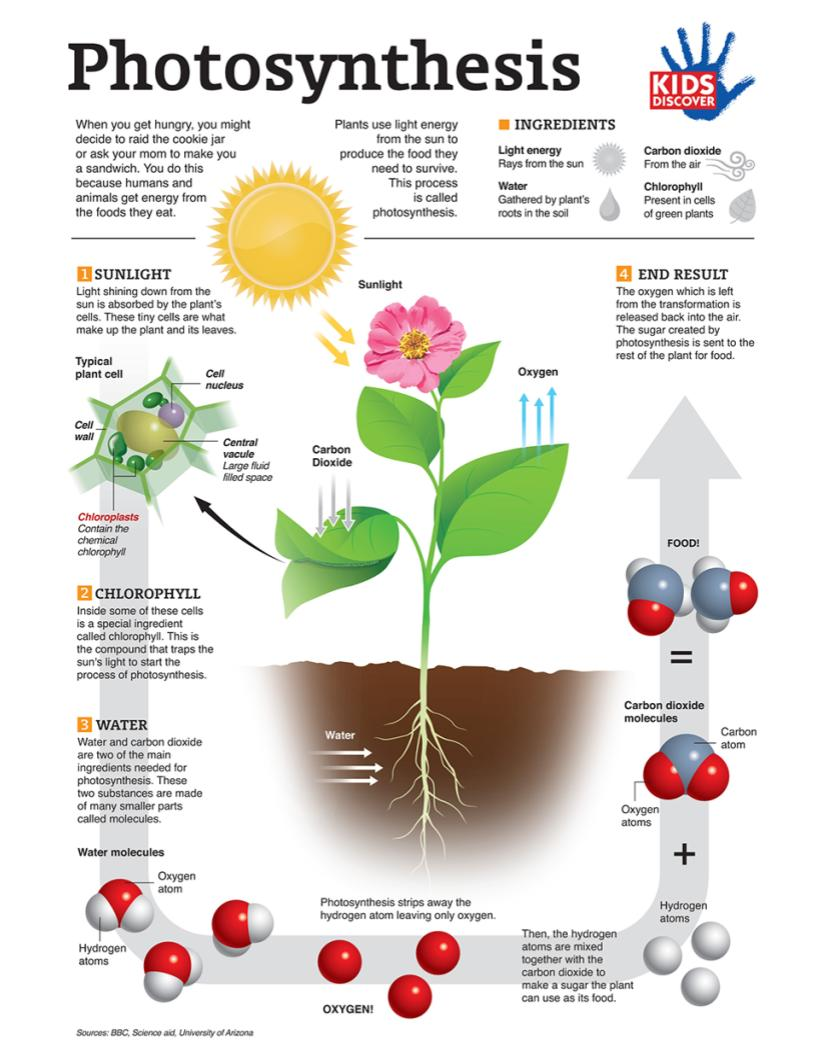

Because a lot of the vocabulary was unfamiliar to them, I wanted them to grapple with the content in a few different ways. First, I taught them how to look at an infographic differently than you would read an article. Then, I had them spend about ten minutes skimming, scanning, and jumping around the paper in order to connect 3 things from the infographic that they could put into a sentence. They wrote their sentence on the paper. Next, they typed their sentence into a 1 question Google form so that I could collect all of their ideas at once. I used this as a formative assessment to see if they understood the overall idea. It wasn’t important to me that they understood every detail.

Student sentences
With all these molecules, sunlight, and different kinds of atoms, it metaphorically helps us make food.
We get energy from food, also water and corbon dioxide is needed in photosynthesis to help plants have energy to,so then suns light will be absorbed in the flower and will give it energy.
I understand that the humans and animals get energy from the food that they eat, the light shinning from the sun is absorbed from the plants cells, and the plants use light energy from the sun to produce the food that they need to survive, this prcess is called "Photosynthesis".

Next, I copied all of their responses from the Form’s spreadsheet and pasted them into the word cloud generator at abcya.com. (One of my colleagues suggested I use the tool at https://www.mentimeter.com/ instead of going through all of the above steps, but I haven’t tried it yet).


After they were through checking out the words on the word cloud, and figuring out where the words were that they had typed, I had them find the 10 largest words. These will be the words most often typed as part of someone’s response. Students then had to go back to their paper and circle these ten words from the text wherever they were found on the infographic. Finally, we were ready to read. We choral read the infographic, whole class, with some discussion along the way. I could tell that they understood the idea of photosynthesis when we moved on to our next step.

We began to categorize the plants and animals that were present in the ecosystem from Safari Live by making a food pyramid from their notes. Students had great discussions about what went where and why. This was done first individually, and then in collaborative groups where they compared their pyramid to others in their group to add missing information.

Student Samples: (She put a link on each category to her examples from her notes that she organized on a different Google Doc.)

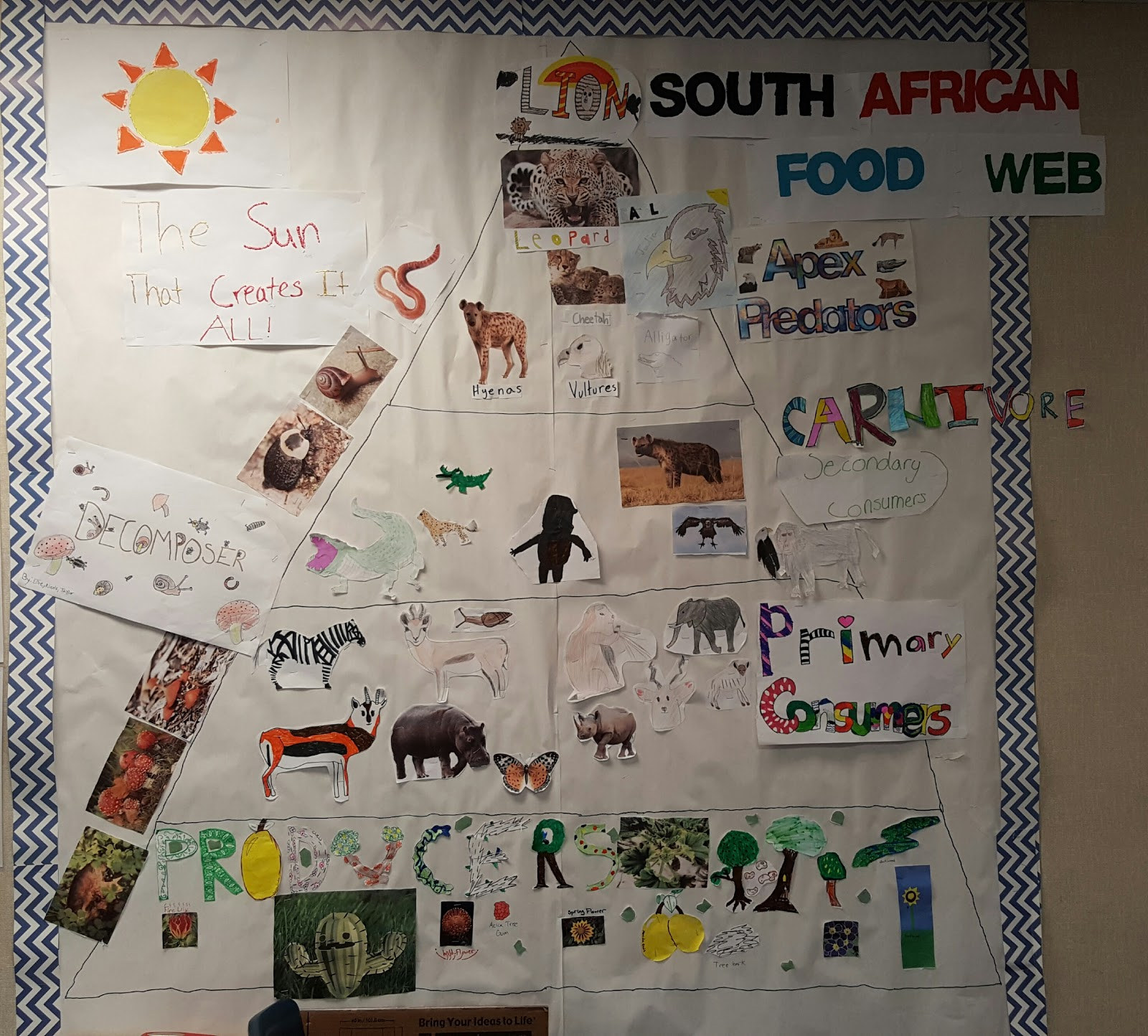
The next step is having them break into groups and physically build a giant food pyramid, based on their notes, on one of the walls in the classroom. Students are grouped by category: Producers, Primary Consumers, Secondary Consumers, Apex Predators, Decomposers, and the Sun. They are using tech to research what the animals/plants look like, and paper/pencil or tech to create them. They will need to put vocabulary and definitions beside their creations as well.

(This is last year’s creation. I can’t wait to see what this year’s will look like)
The summative assment is a paper pencil test where they will use the vocabulary concepts to build a food pyramid on an ecosystem we haven’t studied. If they understand how the energy moves through a system, and what the vocab means, they will be able to construct a model on their own.

It feels so rich to teach using a deliberate combination of paper/pencil, tech, individual, and group work. Hopefully, it feels just as rich to learn in this way as well.

Saturday, December 10, 2016

The Power of Sketchnoting is Real

The Power of Sketchnoting is Real-Brief Version
(This is the shortened version of this post. Once I started processing, the extended version came out a bit long! If you want to know ALL the details, it’s here for you.)

People have been buzzing about sketchnoting for a while now. I have dabbled with it, tried it out briefly in my classroom, and attended conference sessions about it. The ideas were brewing.

Based on a couple of collaboration sessions with my team and other colleagues, a unit came together where sketchnoting was key.

Here’s the sequence of lessons that became a series of powerful learning events.

Prep: Use Voice Recorder app on cell phone to record content from Social Studies text. Do one recording for each region to be studied and upload those to Google Drive. I gave them access to the files via links on a Google doc.

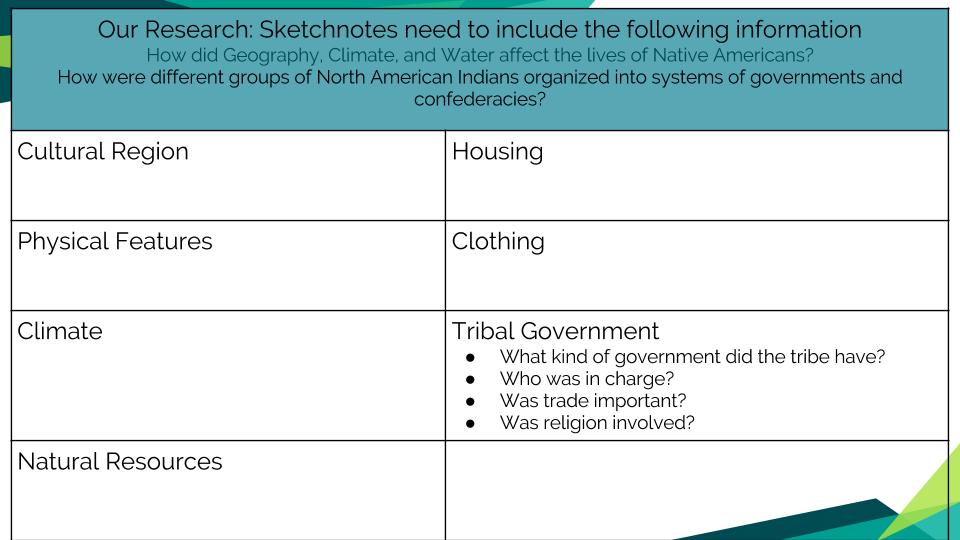
Essential Question: How did Geography, Climate, and Water affect the lives of Native Americans?

Their task: Learn about and understand the following components for your region of the United States. Be able to use your sketchnote to teach others in a jigsaw style. Be able to answer the essential question with specific examples.


Step 1: (15 min) Assign students to one region of the United States and discuss.

Step 2: (10 min) Model the process of sketchnoting for them. I played the audio file that I had recorded for the CA region over the sound system, and sketchnoted on the doc cam. I did a think-aloud while I paused and replayed parts of the recording to model that process for them.

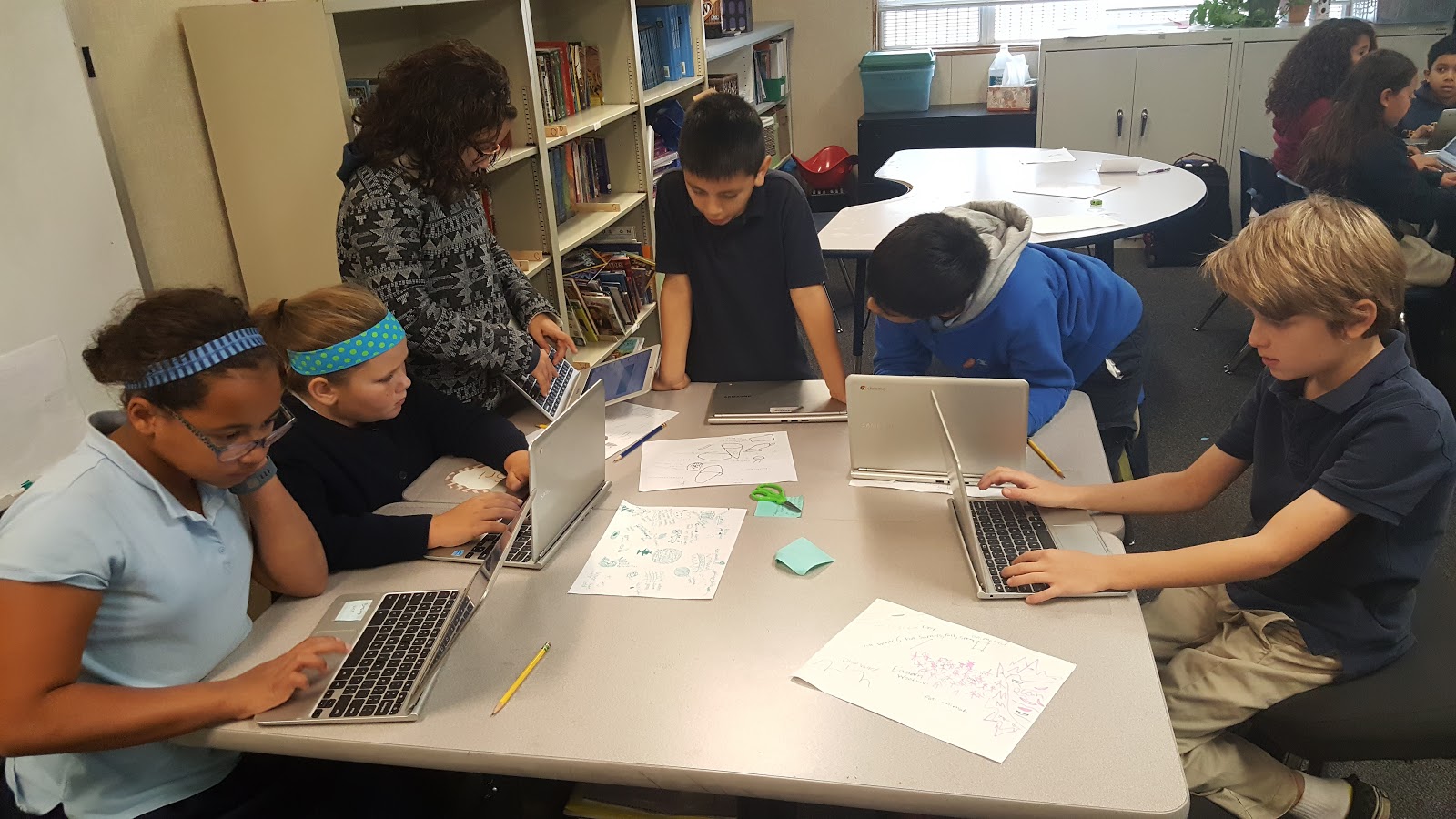
Step 3: (20 min) Have them listen to their region’s recording on their Chromebooks with headphones and begin sketchnoting. They could pause and repeat as needed.

(A finished product)

Step 4: (10 min)  Have them read the same information in the curriculum and add to their sketchnote.

Step 5: (20 min) Put together groups of students that had the same region. They would compare sketchnotes and add even more to their own, based on the ideas from others.

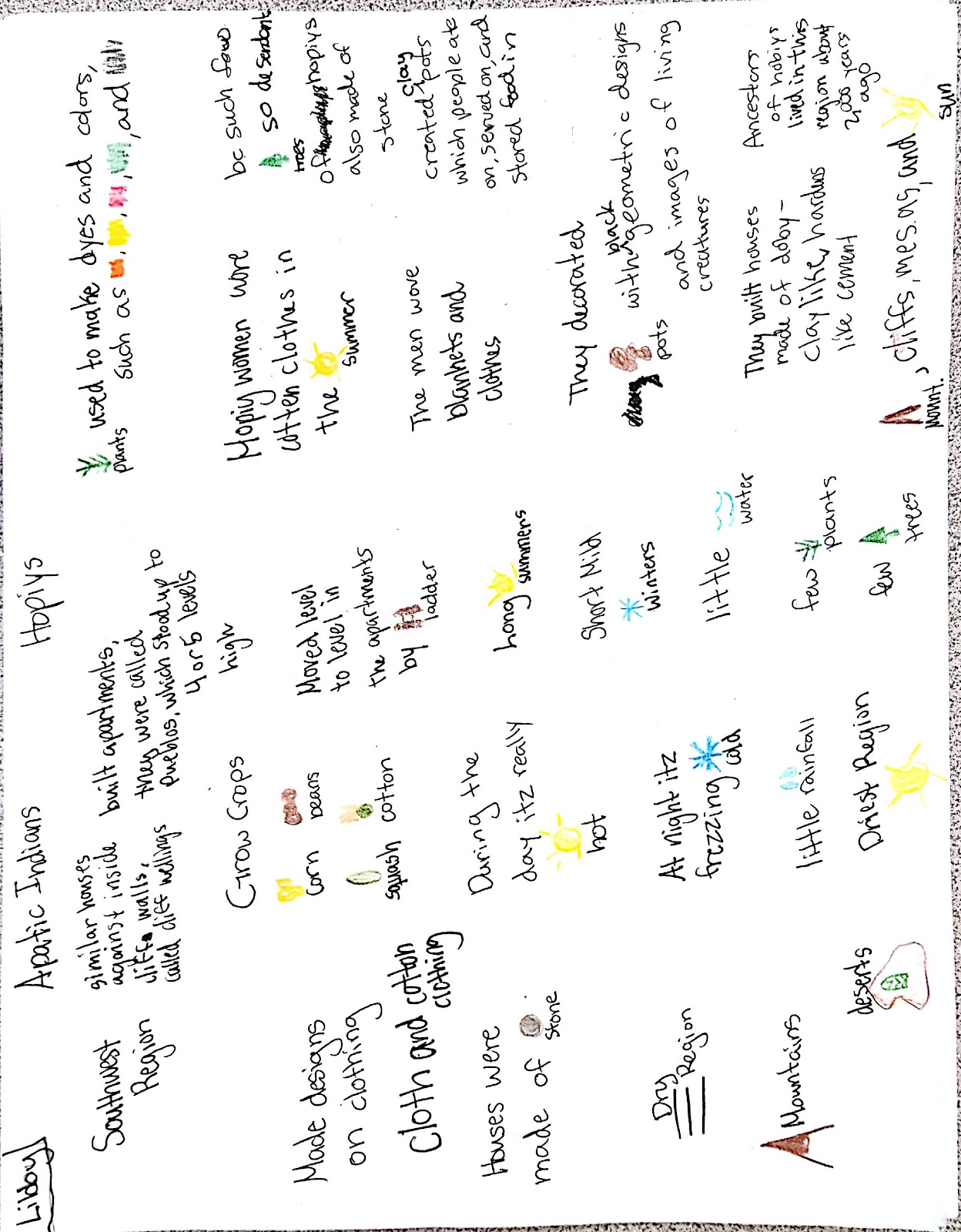
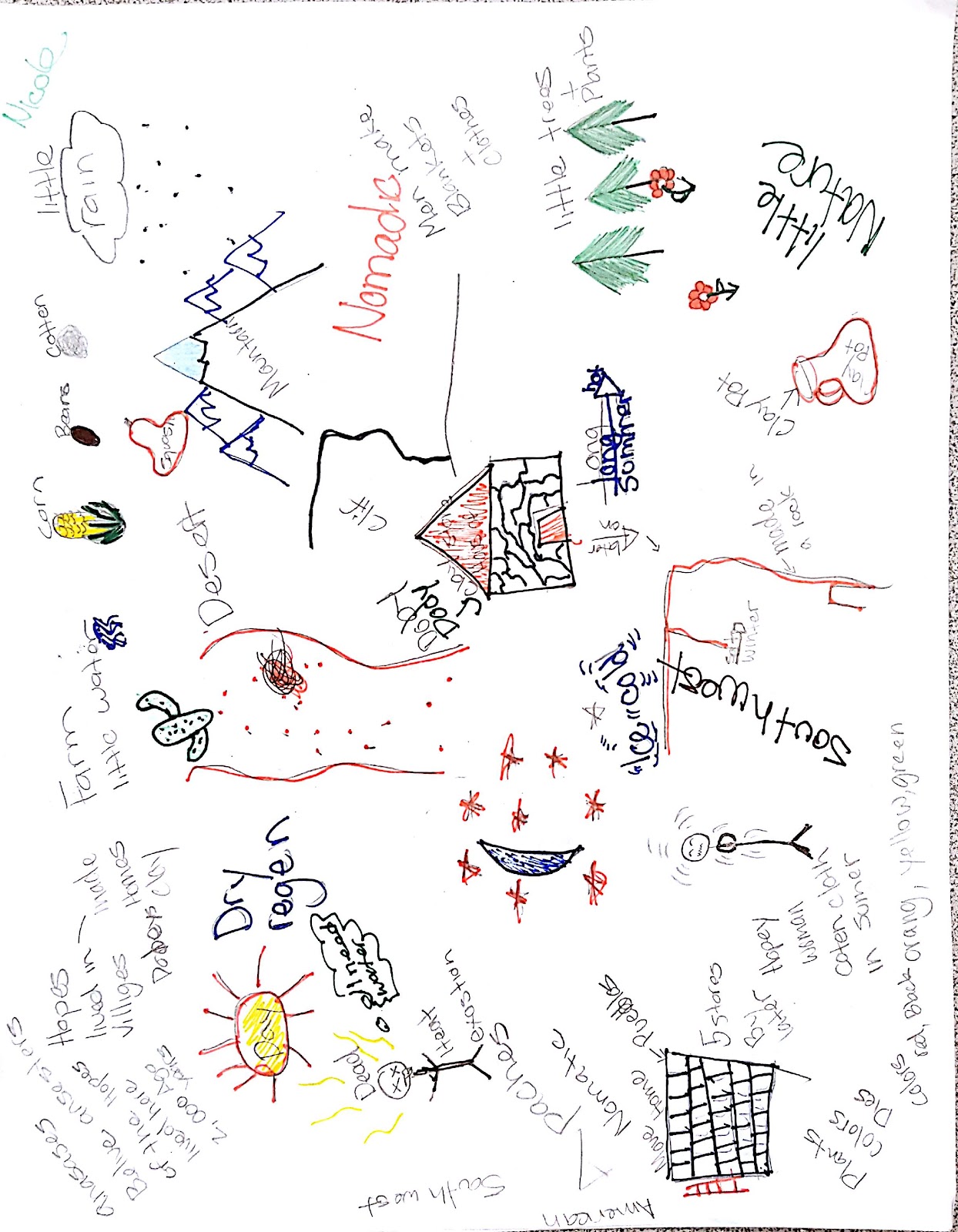
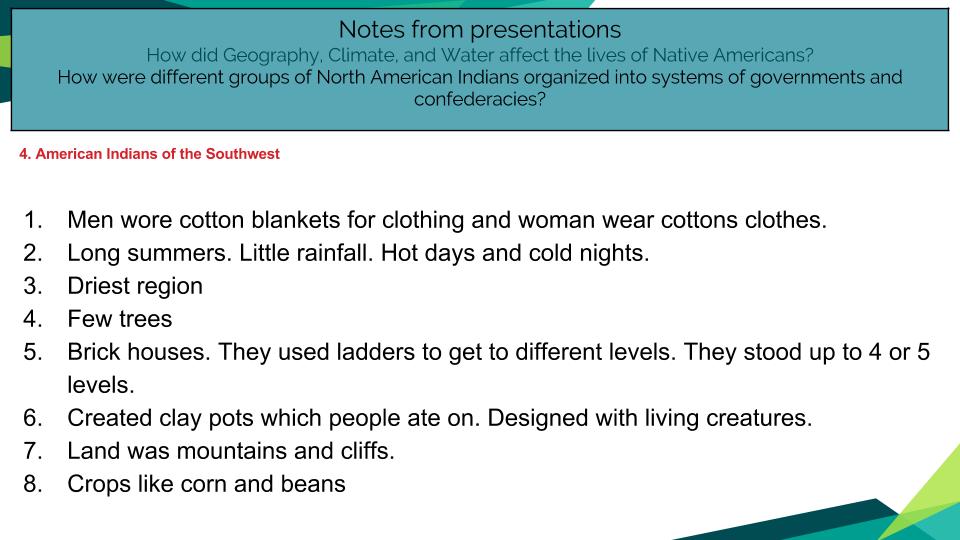
Here are two sketchnotes from the same region (Southwest):

Step 6: (60 min) Split the class up into four groups so that there is one person from each cultural region.
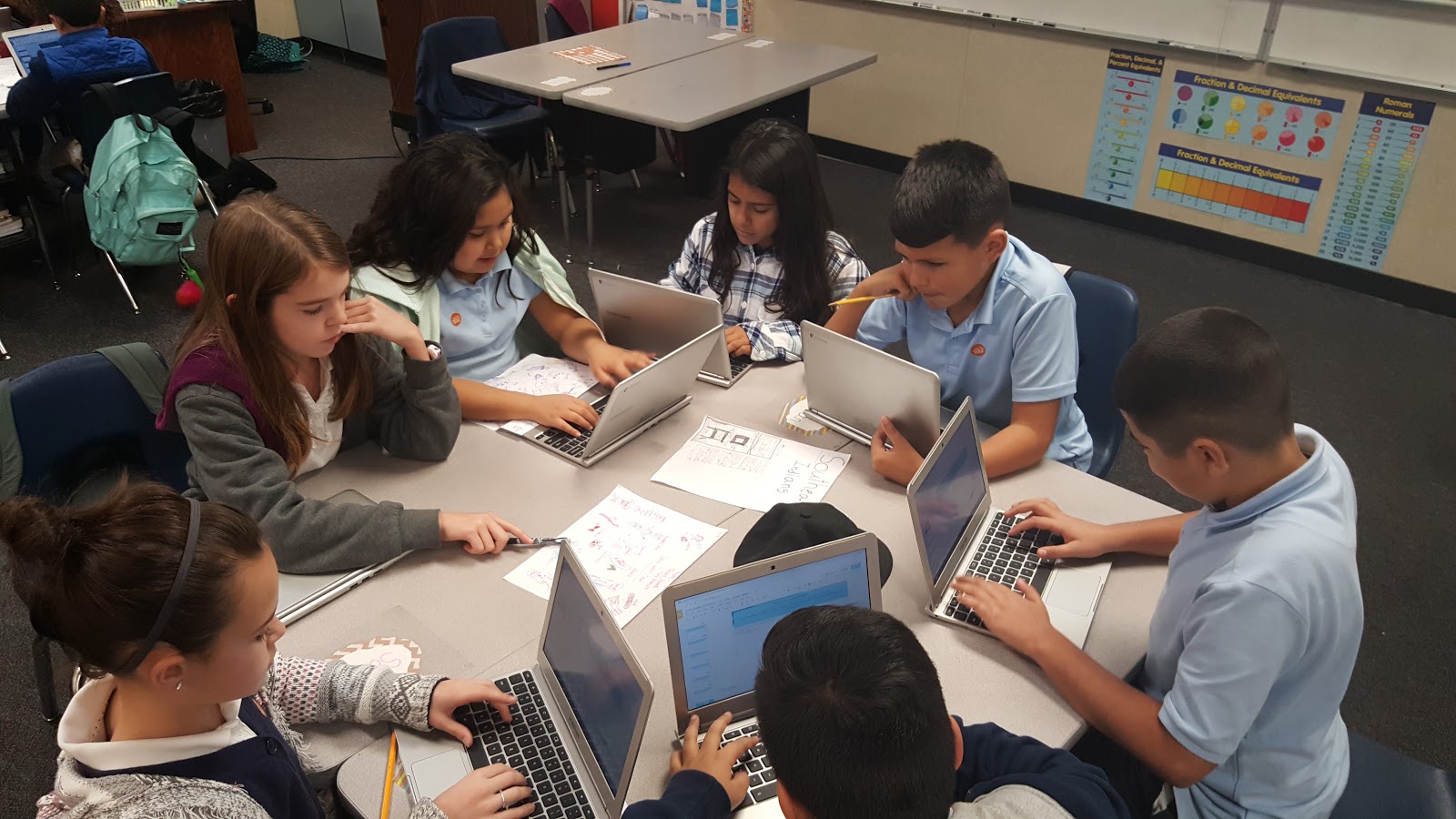
The person who was sharing had 2 minutes to speak. Everyone else gathered around the table so they could hear and had the notepage on their Chromebook open. They could either type while the person was sharing, or just listen and then type when the speaker was done.

(A student’s notepage on the Southwest Region)


No one else was allowed to speak during this time. After the 2 min. was up, the group members could ask questions. This process was repeated for the other 5 regions as well. (We split this section up into two 30 min blocks.)

Step 7: Ask students to answer the essential question in writing. They could use their sketchnotes and note page to pull ideas from.

Takeaways:
  • I was struck by how much each person had to share. Way more than if they had just read and taken notes. 
  • The students didn’t fuss about having perfect art because they had an academic purpose to organize information. The art wasn’t the focus. 
  • The engagement factor was high. 
  • Classroom management was hardly needed. 
  • I can see their thinking on a sketchnote in a way I can’t through writing. It was powerful for me to see.


Grading: I graded their sketchnotes for informational reading, their speaking and listening skills during the group sharing based on my obervations and their digital notes, and asked them to answer the essential question on a Google form for Social Studies content knowledge.

Feedback: I asked students for some feedback on the process. 1 was the lowest score and 5 was the highest.


Would I do this again? You bet!

Sunday, November 13, 2016

A Day in the Life of a 1:1 Classroom

Westlake Charter School 5th Grade

Sometimes people assume that because I have a Chromebook cart in my classroom that I use them all day long. I wanted to document for myself, as well as for others, how much tech my students do use in a day, but more importantly, what the purpose was.

As I document a day below, you’ll see that students hop on and off of their devices all throughout the day. I feel like it is a good balance of extended use and short check-ins that blend with hands-on learning as well. The atmosphere is flexible and not constrained by a schedule of sharing devices. Because of this freedom, I am able to have a dynamic, engaging atmosphere that is supportive of individualized instruction. Students are thriving, and so am I!

7:45
School Begins
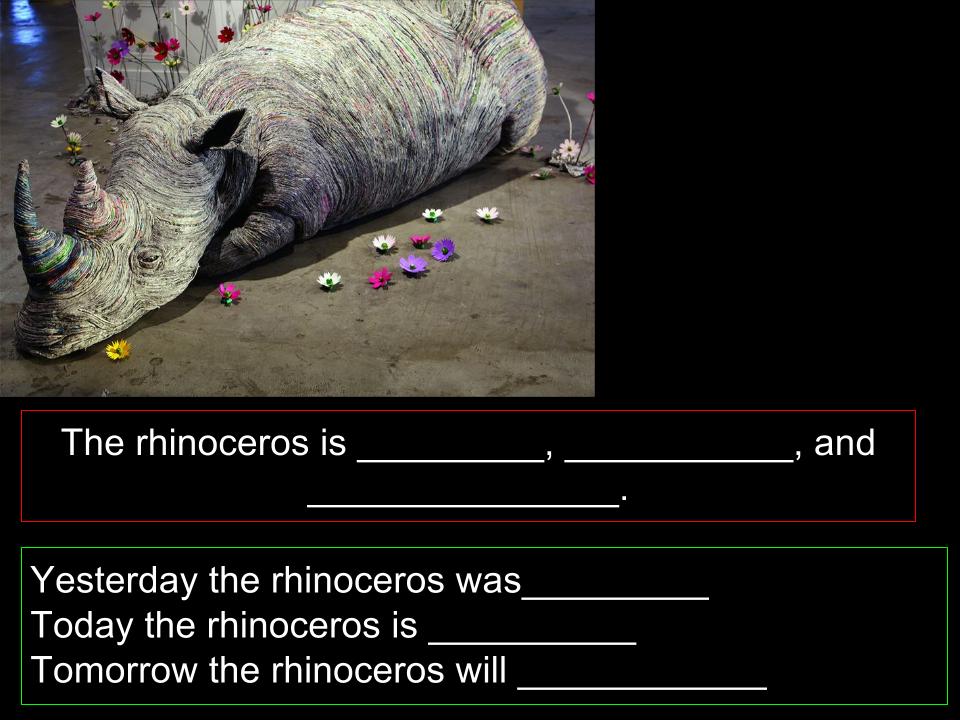
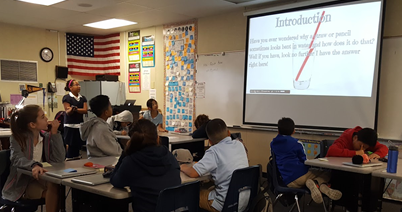
Students come in to see what is projected on the screen. It’s always an image. I ask them to come up with 3 details they notice, 2 questions, and draw a conclusion about what they think is going on. They usually do this in their spiral notebooks. About once every 15 days, I will have them type this into a Google form so that I can assess their sentence construction. I have now added a grammar component in as well. Students share sentences with each other, and I walk around to provide feedback.

1What do you notice.jpg


8:00
Math
Most of the time, I deliver direct instruction and have students explore math content on whiteboards. Sometimes, students will work with McGraw Hill’s online component for our program, My Math.
On this day, I had students construct a number line in Google Draw so they would understand the concept of rounding a decimal to the nearest whole number.  After the number line construction, students worked a few problems in their math book, whole class. I’ll come back to this concept on another day.


8:40
Math continues with differentiation
I pull a small group to the carpet who still need help with place value and decimals, while the rest of the class works on Front Row assignments and then Prodigy. Front Row is a subscription we pay for where I can assign students individualized content. Prodigy is a free program where I can also assign students content. I can check in on reports of their progress and monitor how much time they are spending on each domain.


9:00
Wonder Report Research
Students have time to work on a topic of their choice. They need to come up with a question that is more than just Googleable, pull from 2-3 sources (for now), take notes, write either an informational, narrative, or opinion paper (their choice) using their source information, and present it to the class. Some students are currently researching the mystique of the Illuminati, how many emotions we go through in a day, why humans exist, and why people are so interested in sports. This is all done on Chromebooks.

9:20
Wonder Report Presentation
When they are ready to present, I pull up their work on my computer and project it. (Students do all of their work in a 5th grade folder that they share with me so I can access all of their projects at any time.) They present their information while the rest of the class is responsible for recording on a sticky three things they learned from each report for a Speaking and Listening grade. There is no due date, and when they complete one presentation, they start researching their next Wonder.


9:30
Snack Time
About 7 students typically head out to the ramp to have a snack break. The others use these 10 minutes to play each other in Prodigy, code on Scratch, or play Little Alchemy.


9:40
Morning Meeting
We circle up for Morning Meeting every day so that students can engage in the rituals of greeting each other, sharing an idea with the class, participating in an activity, and reading a morning message. When I recently asked students for feedback on our first trimester, 27/28 of them ranked Morning Meeting highly. No tech involved.


10:00
Literacy #grapax
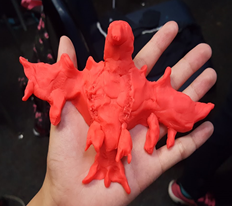
Right now we are participating in The Global Read Aloud and are reading Pax, by Sarah Pennypacker. When I read to them, I project the book through my Kindle app so they can follow along if they want. This way, I can highlight sentences to analyze, or point out vocabulary that is worthy of stopping for. One of the main areas of study in the book is character analysis. We are working up to a major essay comparing the two main characters. Students are working out the scenes with Play-Doh while I am reading, and will share them when our session is complete.


10:20
Character Analysis
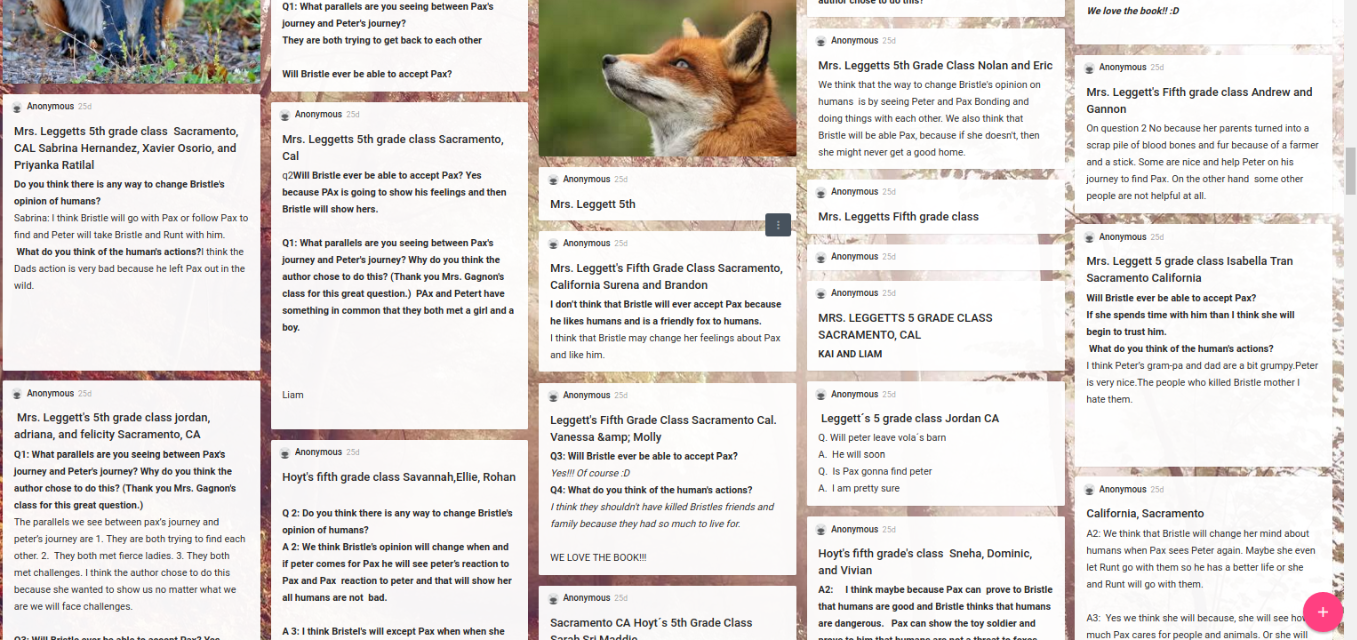
Students check in on the Padlet where Chapter 11 Twitter Slowchat questions are being answered. They work in a group of 4 to discuss the questions, type their group’s response on a Google Doc, and then paste it onto the Padlet. Classes from Ohio, Wisconson, Canada, New York, Texas, Illinois, N. Dakota, and Connecticut have also posted here, so the engagement factor is high.


10:45
Recess and lunch


11:30
Silent Reading
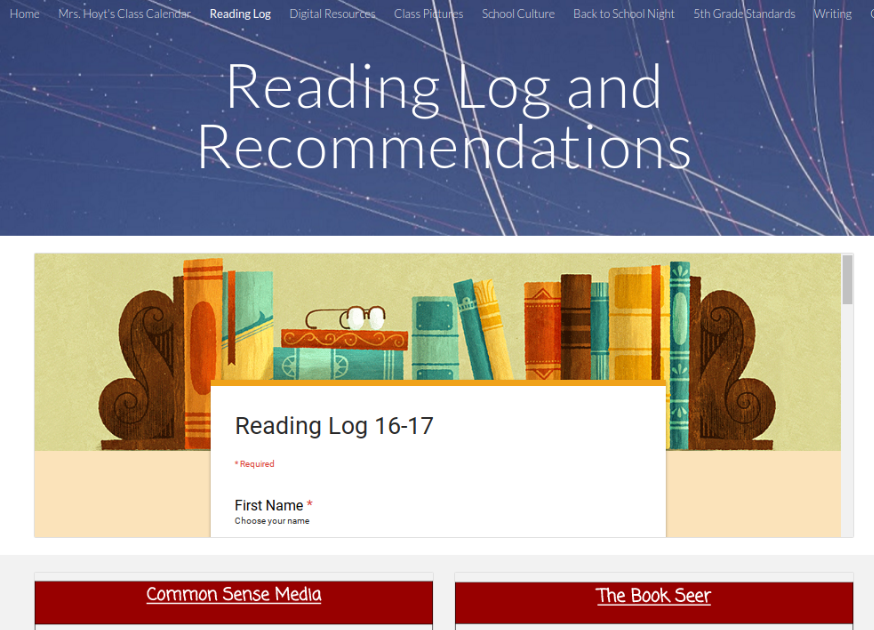
Students are working on their choice of reading goal: AR points (totally optional), 1,000,000 words by the end of the year, and/or 40 books by the end of the year. They track their books when complete on a quick Google Form. They have access to their data anytime. My goal is to conference with them once a week to check in, help them choose books, and push them to expand into new genres. I like that they are able to access their own data whenever they want because it has kept them personally motivated to read, and has allowed them to give recommendations to others as well. The log is located on my class website.


12:00
Science #ngss
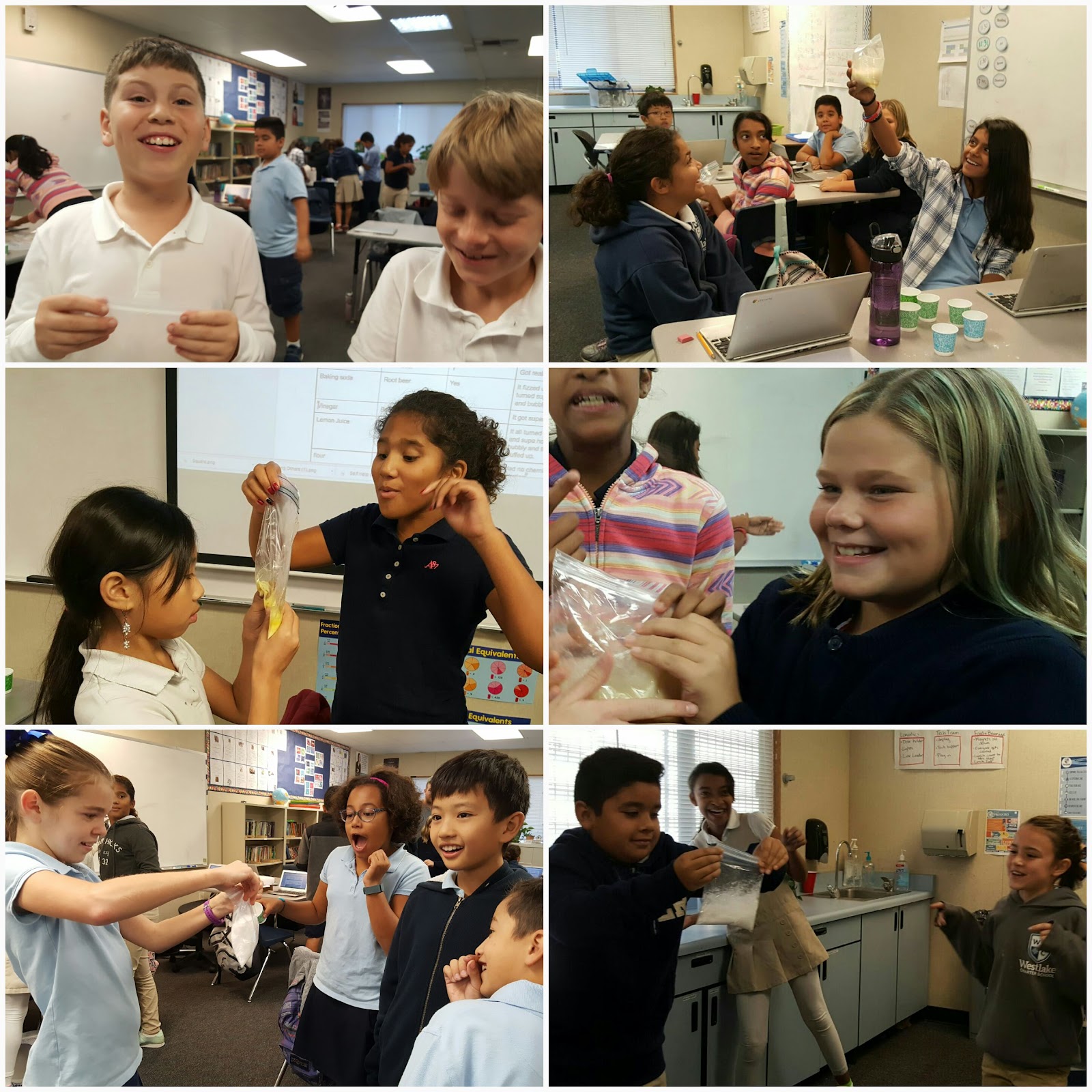
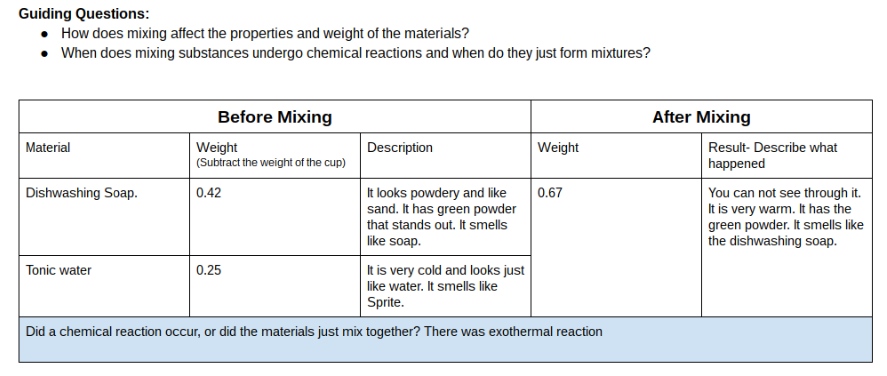
We are currently exploring the changing states of matter. Students are mixing different substances, and weighing them before and after the mixing to determine whether or not matter increases, decreases, or stays the same. They are logging their data on a Google Doc.

20161102_214058 (1).jpg


12:55
Afternoon Recess


1:05
Word Work
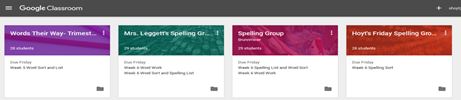
All four of our 5th grade classes mix up on Fridays to practice spelling sorts through Words Their Way. They get time to practice in class. Each teacher made a Google Classroom for their spelling group, so students can access their words in their home class. There are directions for practice and word lists to use online. Students work together to sort and spell their words.


1:30
Spanish
Our Spanish teacher comes in, and I have a prep period. She has a Google Classrom set up as well, and the students spend some of their time accessing vocab lists, or instructions for assignments there. She also has them practicing on Duolingo for part of the class on certain days.


2:10
Prep for Virtual Field Trip with Learn Around the World #geoshow
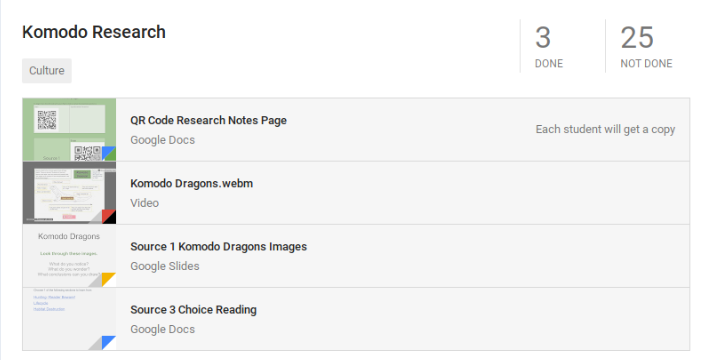
We are taking a Virtual Field Trip to Komodo National Park in Indonesia tomorrow, so students have some exploring to do. They use the iPads we have checked out from the communal cart to scan QR codes on a Google Doc. Each QR code will take them to a different source to explore. Their goal is to find out what makes the Komodo Dragon such a unique and amazing creature so that they will be prepared to share facts and ask questions tomorrow. The sources are a combination of images, reading and a video.


2:45
Dismissal- Whew!