Going on Safari
I discovered Wild Earth’s Safari Live over my Winter Break, and immediately became a fan, both personally and as an educator. WildEarth streams Safari Live, a live, interactive broadcast of a safari drive in South Africa twice daily for three hours each day. The guides are super knowledgeable and entertaining, and we loved that we never knew what we were going to see! Thank you Erik Moore for posting about it in the Google+ Community Connected Classroom Workshop.
About WildEarth
WildEarth Mission Statement:
“Our mission is to provide people around the world with immersive experiences in nature. WildEarth is a dedicated LIVE wildlife platform that focuses on connecting people to animals.”
Info about WildEarth:
WildEarth streams Safari Live, a live, interactive broadcast of a safari drive twice daily for three hours each day. The broadcast is streamed on four platforms: Wildearth.tv, Ustream, YouTube, and NatGeoWild. Viewers may submit questions to the presenters via email, Twitter, and YouTube Chat.
|
My first thought was a science connection, but I quickly realized the potential to expand across disciplines. In 5th grade, we focused on the following as a base academic layer.
Essential Question: How does energy move within an ecosystem?
|
Standard:
5-PS3-1 Use models to describe that energy in animals’ food (used for body repair, growth, motion, and to maintain body warmth) was once energy from the sun.
|
Product: Make a model of the food webs you discovered on Safari Live. Show how the energy was once energy from the sun.
|
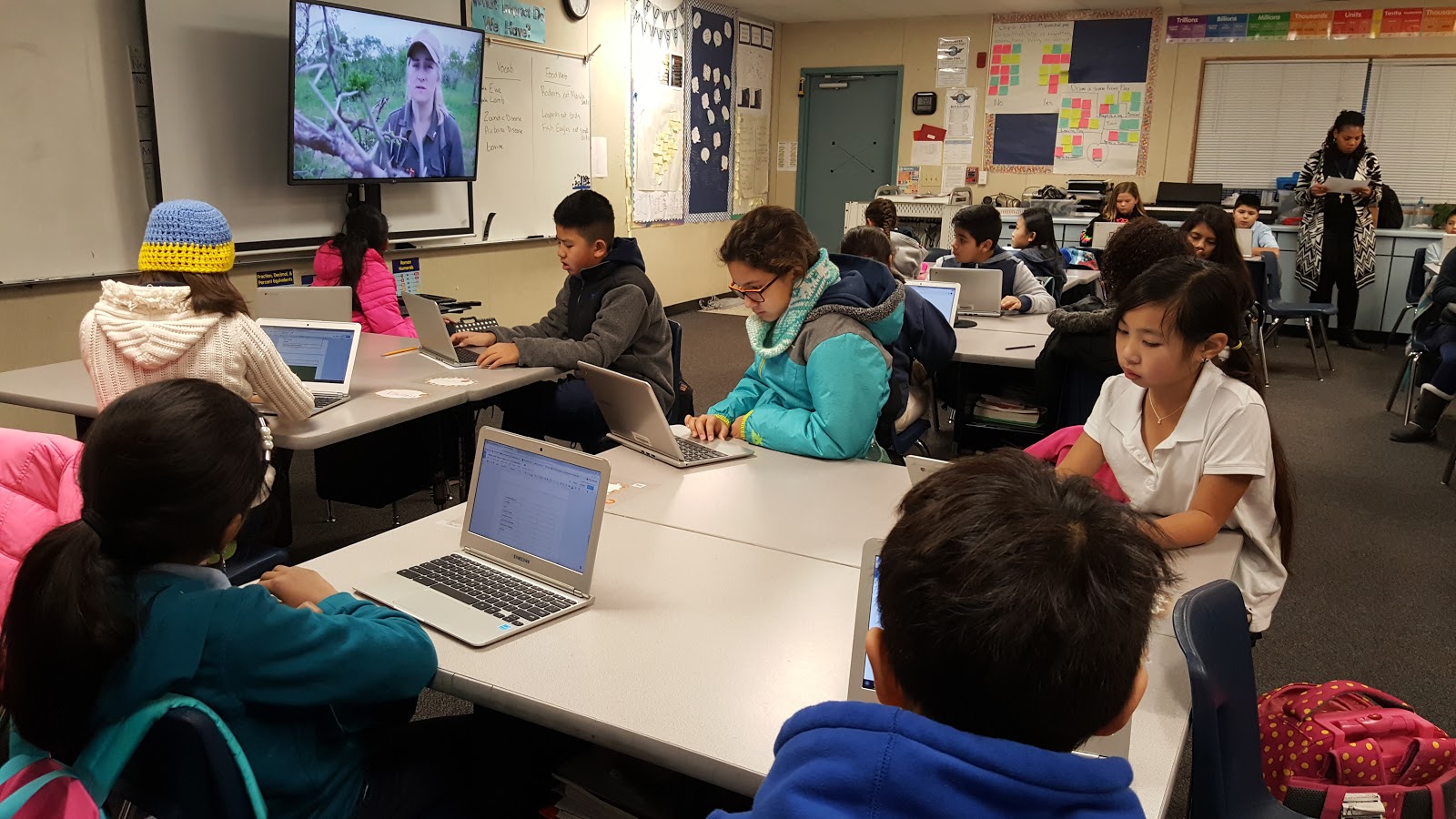
I made the students a note page and pushed it out through Google Classroom so that they would be interacting with the content as we watched. The beauty of having a live safari is that you don’t know what content will end up on your page. Talk about releasing control! We initially didn’t sign up for a specific school slot because of our time zone, but we could easily tune in through their YouTube channel and watch the last hour of the sunset drive.
Vocabulary
|
Determine or clarify the meaning of unknown and multiple-meaning words and phrases based on grade 5 reading and content, choosing flexibly from a range of strategies.
|
I wrote vocabulary words up on the board as they came up, and the students researched the definition right then so that they would have a greater understanding of the information the guides were sharing. Here is an example of the vocab we covered. (I only gave the definitions after they had a chance to grapple with the meaning in the context of the safari.)

Here is what the vocab portion of their notepage looked like from a different day. I liked it because they had to show their own understanding of the words, and we came back to them each time we watched safari.
Let’s build our knowledge!
| ||
Vocab Word
|
Definition
|
Image
|
Mud Wallow
|
To lie or roll in mud.
|  |
Predator
|
An animal that naturally preys on another.
|  |
Stalk
|
To pay a very close attention on someone or something.
|  |
Thicket
|
A dense group of bushes and trees.
|  |
Science
5-PS3-1 Use models to describe that energy in animals’ food (used for body repair, growth, motion, and to maintain body warmth) was once energy from the sun.
|
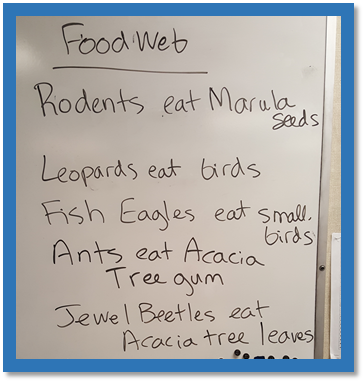
To keep focused on this standard, another portion of their student note page was devoted to who eats what. I wrote notes on the board for them to copy, but it would be up to them later to categorize and connect it all.
After students had watched for several sessions, I taught them the terms that would help them make connections within this habitat. They had to pull from their note page and fill in the following food pyramid. They were given the titles for the sections, and they had to figure out where each plant and animal went. They worked in groups to do this, so there was a lot of great negotiation in language going on.
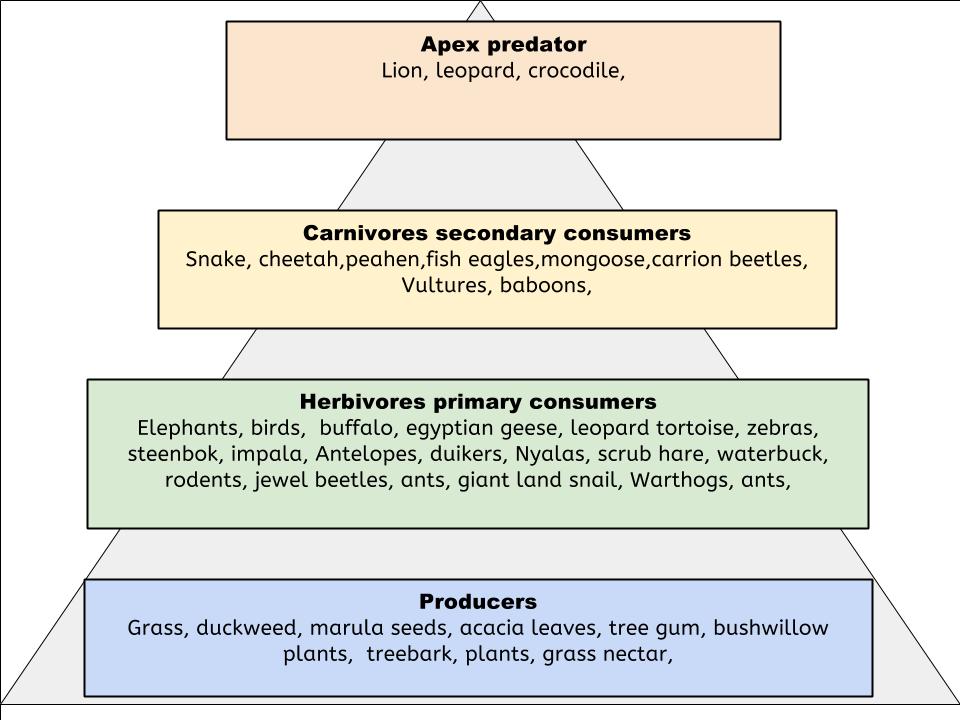
After this step was completed, they formed different groups depending on which category they wanted to work in. Their task was to create a bulletin board that was a combination of all of their information. I drew the outline of the pyramid, and they did all the rest. Each group was tasked with agreeing on what truly belonged in their category, and deciding who would be responsible for creating each piece. They had to have both vocabulary and images on the board. The energy that went into this creation was exciting!

Writing
CCSS.ELA-LITERACY.W.5.3
Write narratives to develop real or imagined experiences or events using effective technique, descriptive details, and clear event sequences.
Use narrative techniques, such as dialogue, description, and pacing, to develop experiences and events or show the responses of characters to situations.
Draw evidence from literary or informational texts to support analysis, reflection, and research.
Use precise language and domain-specific vocabulary to inform about or explain the topic.
|
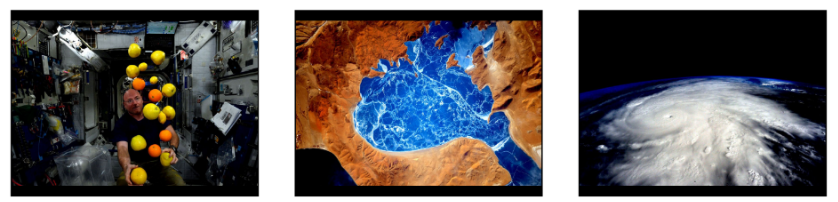
The writing that students engaged in along the way covered multiple standards. I used images that viewers posted on Twitter as a visual prompt each morning. Students were asked to write descriptive sentences about the images, create dialogue between two characters in the image, read facts about the animals in the image and write a quick paragraph about it, and complete writing pieces that I started for them. They practiced using evidence from sources, matching the author’s purpose, narrative writing techniques, and including domain-specific vocabulary in their writing.
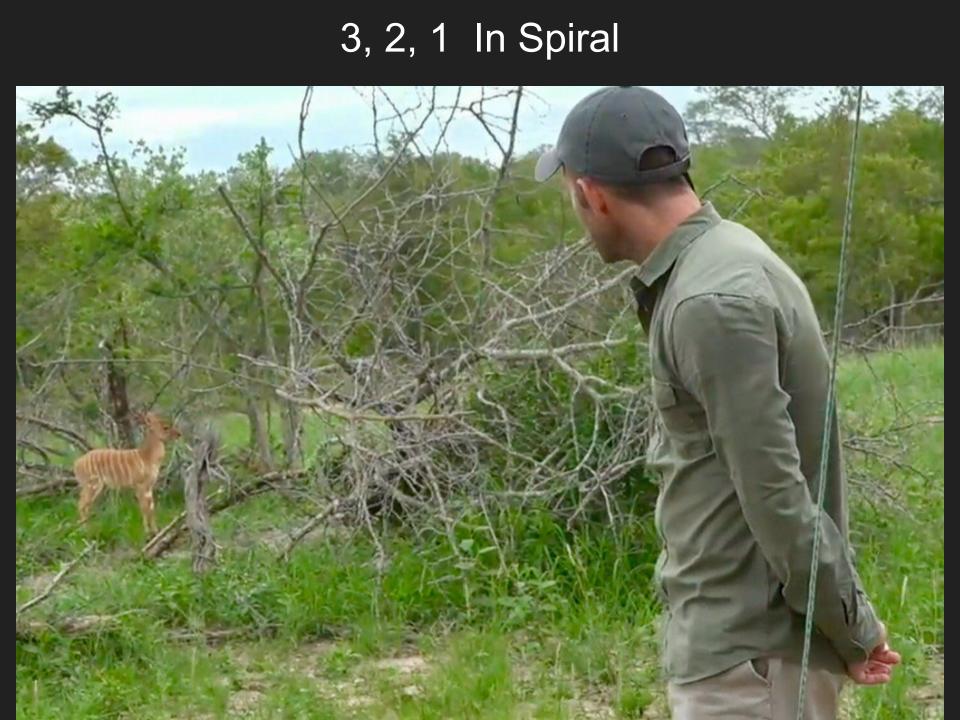
Missing Introduction and Conclusion assignments were great mini lessons that helped students focus on one area of their writing at a time.

Speaking and Listening
|
Engage effectively in a range of collaborative discussions (one-on-one, in groups, and teacher-led) with diverse partners on grade 5 topics and texts, building on others' ideas and expressing their own clearly.
Come to discussions prepared, having read or studied required material; explicitly draw on that preparation and other information known about the topic to explore ideas under discussion.
Follow agreed-upon rules for discussions and carry out assigned roles.
Pose and respond to specific questions by making comments that contribute to the discussion and elaborate on the remarks of others
|
Students had multiple opportunities to share ideas with each other throughout our time using Safari Live content. They shared their writing with each other in order to get new ideas for themselves and get feedback on their skills, they had to negotiate and agree on how the bulletin board was formed, and they helped each other figure out vocabulary and relationships among plants and animals.
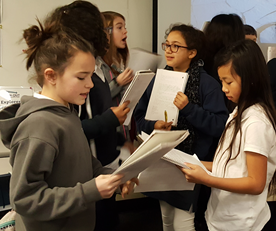
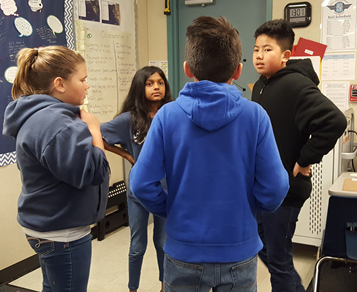
Thank you Wild Earth for making this amazing opportunity available to us! #safarilive
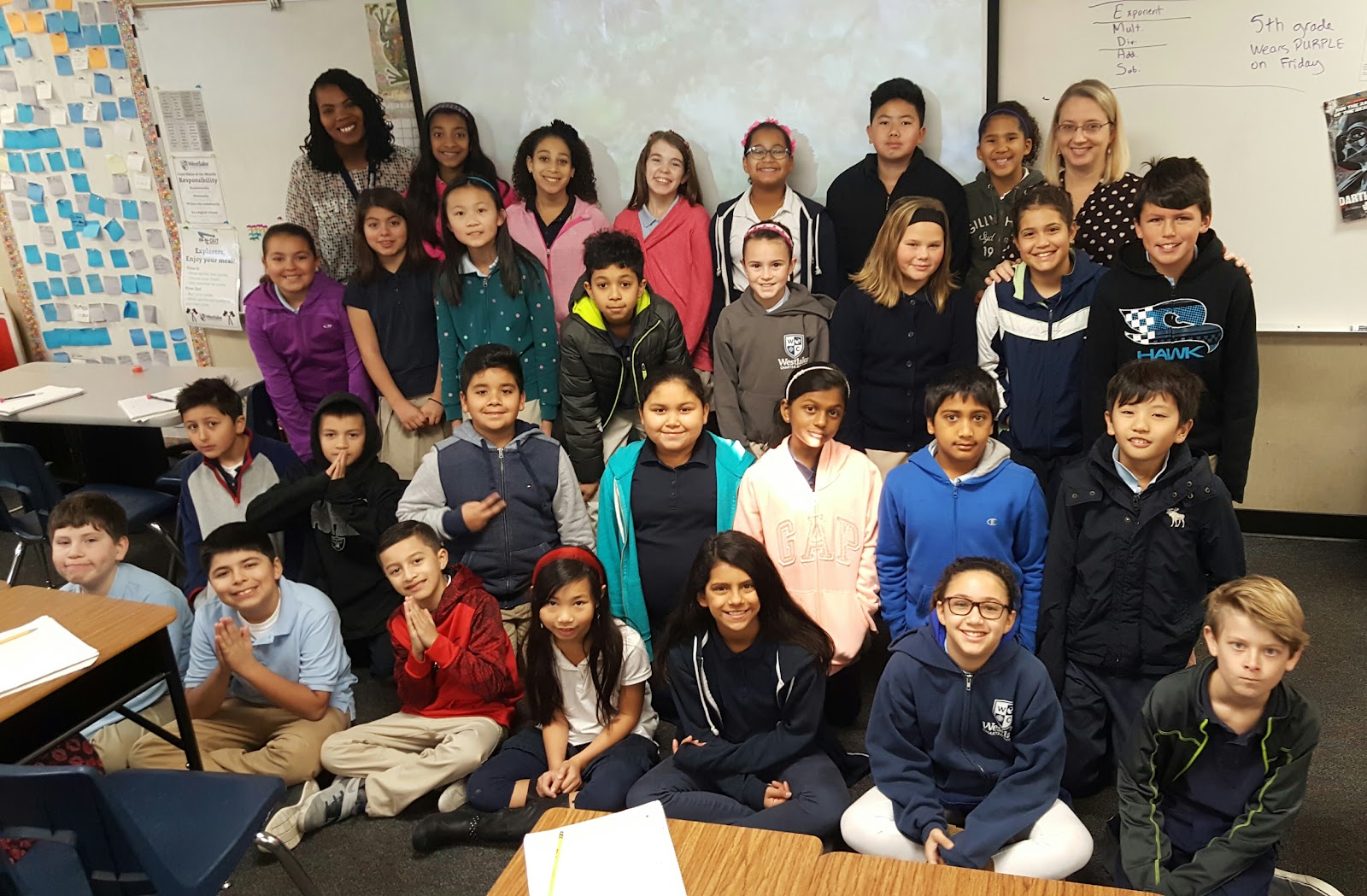
Feel free to reach out if you have questions about implementation in your own classroom. @sallyhoyt