Showing posts with label #geniushour. Show all posts

Friday, August 26, 2016

My Wonder Wall


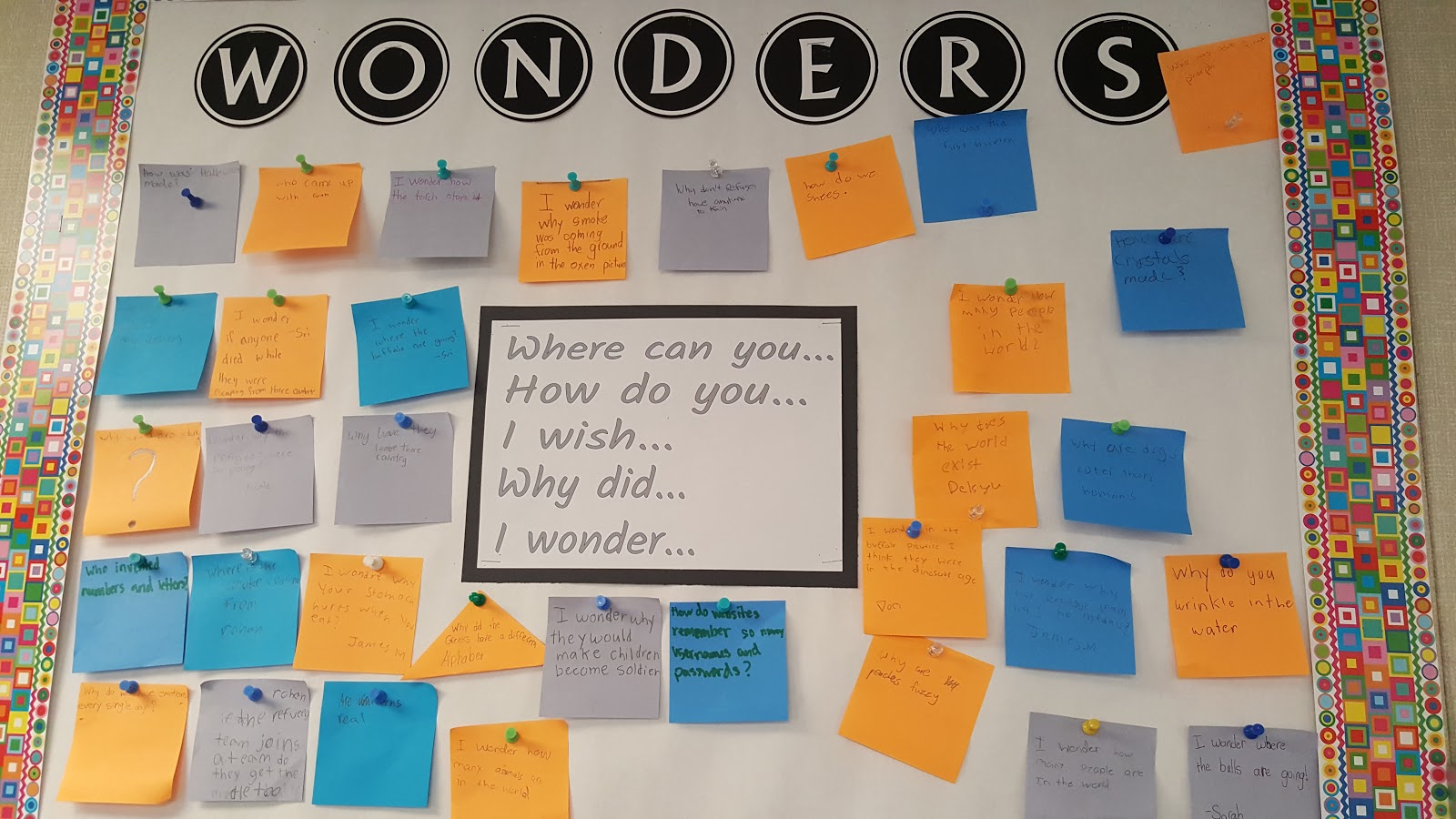
Kids have a lot of questions, but how often do we give them an opportunity to ask them? This year I am trying out a Wonder Wall in my 5th grade classroom. Whenever students have questions, they can post them on the wall, and periodically I will give them a chance to research some answers.

Here’s what it looks like so far:
wonderwall.jpg

My goal is to work up to Genius Hour, but I want to scaffold up to it in a way that teaches students how to ask a good question and how to research effectively. So far, I’ve given them interesting sources, a chance to discuss them, and a designated space for wondering.

One routine we have every morning is a practice of noticing. I put an image up on the projector and they pull out details. We have worked on the quantity and quality of their noticings, and are working to define quality descriptions of details. It’s a great start to the day when students are asked to look at details, write about them, and have a chance to discuss their ideas. It only takes 5-10 minutes, but it is my favorite morning routine. I have seen these skills transfer into writing, speaking, and listening.

Here is one image students worked on:
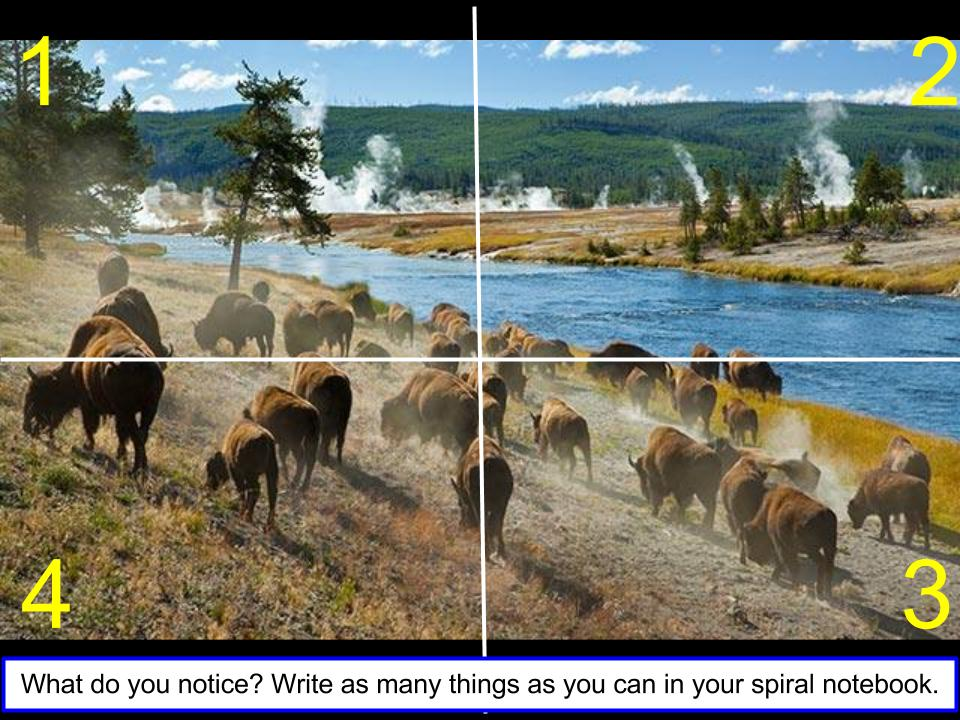
Students silently wrote down a few details they noticed about all 4 quadrants and then chose the most interesting detail that they wrote. They shared that idea in a circle of friends where others listened and responded with, “I agree with you because…” or, “Interesting, I would like to add on to your idea.” From that discussion, they were encouraged to post a question on the Wonder Wall.

Students wanted to know
  • Why there was smoke coming out of the ground?
  • Where the bulls were going?
  • And how many animals there are in the world?
I wouldn’t have known they were curious about those things if I had just moved on.

We read an article about the Refugee Olympic team together at the start of the Olympic games, and that generated some great questions for the wall.
  • Why did people have to leave their country?
  • Why would someone want to make children become soldiers?
  • Why is there war?
  • Why doesn’t the refugee team have any medals?

I also showed them the website Wonderopolis. They had a chance to read whatever they wanted, explore the site, and come up with wonders.
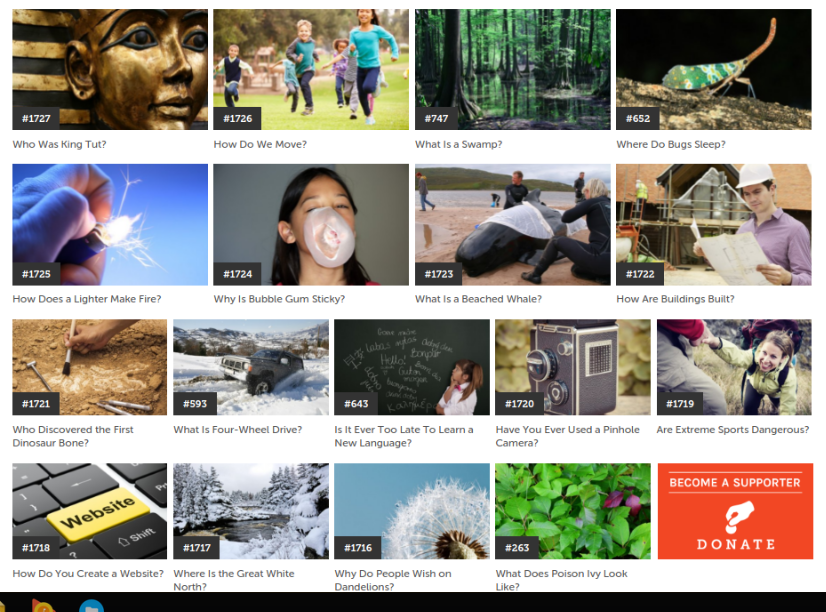
They only had 15 minutes on it, but they posted the following questions on the wall:
  • Why do peaches have fuzz?
  • Why do we have emotions every single day?
  • Why does your stomach hurt when you eat?
  • How do websites remember so many usernames and passwords?
  • Who invented numbers and letters?
  • Why did the Greeks have a different alphabet?

I am so jazzed about the potential this wall has for sparking curiosity. These kids are going to do a lot of reading, writing, speaking and listening this year.

My next steps will be to investigate the difference between a Googleable question and a BIG question. We will practice crafting BIG questions, and I’ll give them some time to research. We’ll hone our searching skills, and practice writing and presenting. Eventually, we’ll work up to a larger Genius Hour type product. I can’t wait to see what they create!

And by the way, there are a bunch of standards we are covering with these activities. BAM!

Monday, June 6, 2016

Genius Hour in Special Education

Genius Hour in Special Education


The idea behind Genius Hour, or 20% time, is to allow students to choose their own area of interest to learn about. I’ve been wanting to try Genius Hour since I heard Kevin Brookhouser speak about it at a Dry Creek Staff Development day, several years ago. However, I haven’t had a class of my own for the past four years to try it out with! Luckily, I’ve been able to develop a relationship with two Special Education teachers who agreed to give it a try with me.


I have been talking to teachers all over the county who have tried Genius Hour projects. All of them see the benefits, and all of them have struggled through the process of how best to implement the idea. It’s the perfect project for modeling our own Growth Mindset, that’s for sure!


When I pitched the idea to these two teachers, their initial reaction was, “That sounds exciting!”


Then, our conversation turned to the realities of what it would mean for Emotionally Disturbed students. I was most worried that doing an open ended project like this would not be routine enough for the students. I really struggled with how much structure to use. All three of us agreed that we would need to be fully flexible, differentiate for each student, and not put too much pressure on them to produce.


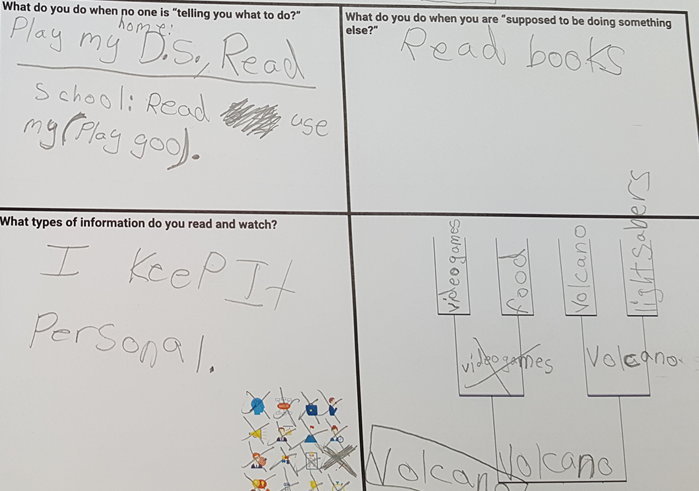
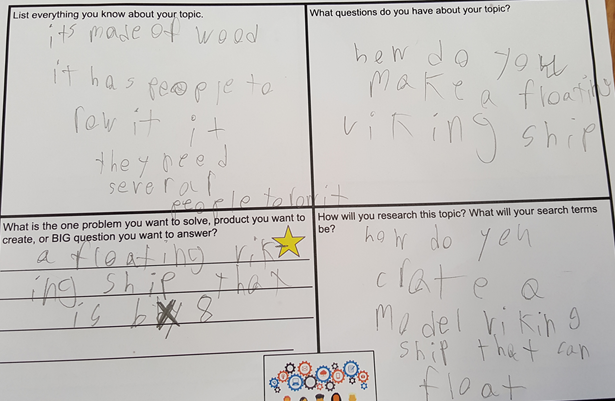
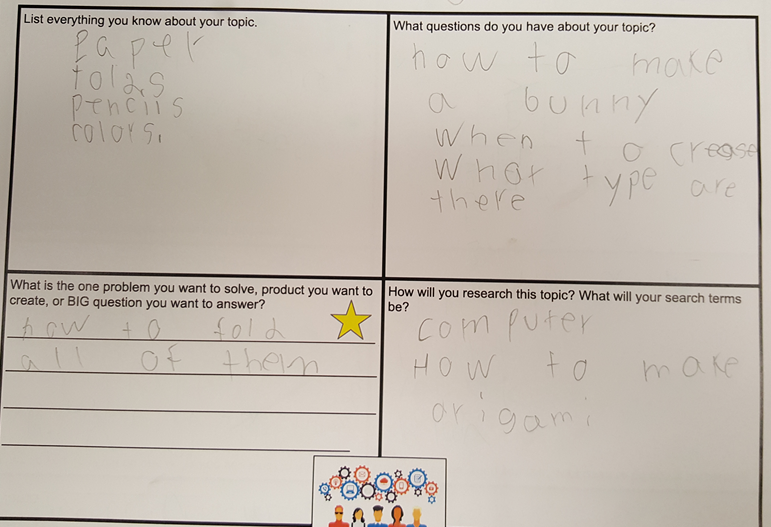
The students ranged from 4th-12th grade and were split into two rooms, a 4th-7th, and an 8th-12th grade group. I started out in each class with a whole class discussion on the background of Genius Hour, and a brainstorming session for their own ideas. We used  A.J. Juliani’s resources as a template, and the results looked like this:


This part of the process worked really well. They were intrigued that I would ask them what they liked to do when no one was telling them what to do, or what they do when they were supposed to be doing something else. After those brainstorming discussions, putting their ideas into the bracket system helped them choose a focus. That was the end of session 1. The majority of students were able to pick a topic at the end of that session.


When I came back the next time, we used that topic and expanded upon it. This is where it started to get tricky with the 4th - 8th graders. Some of them wanted to partner up, others didn’t like their idea, and some really wanted to switch to an idea that their friend was doing. The 9-12th graders were mostly content with their choices and stuck to them.


The expansion of the idea was tough whole class. I would have liked to have taken more time on this. One teacher I talked with suggested spending a lot of time teaching the students to come up with a really good question. It would have been great to have them replace a verb like learn with something higher up the Bloom’s Scale.


The variety of topics they picked really spoke to the individuality that Genius Hour is supposed to embody. A group of them became really excited about making a volcano. That energy turned into a whole class lesson on volcanoes, and a baking soda/vinegar explosion.


One high school student already knew how to play the bass, but he wanted to investigate the history. He ended up learning many new things about his craft and said he loved the project.


One of the middle school students wanted to learn how to become a police officer. They had worked through a couple of lessons on police officers in class, and he wanted to take it a bit further. He ended up doing some online research, and then coming up with questions that he wanted to ask an officer. We were able to email two officers, and he got personal responses from both of them. That made his day.
Another middle schooler wanted to learn how to fold Origami. He really wanted to fold Pokemon and spent a lot of time looking at YouTube videos to try to figure it out. He got a lot of the other students hooked on it as well. He didn’t end up making any Pokemon, but his end result was very satisfying to him!


The end result:
He said he learned to be patient, not to give up, and to just keep trying if you don’t get it the first time. #lifelessons


A different middle schooler wanted to figure out how to make a Viking Ship. He already knew a lot about Vikings, so now he wanted to build. He found a YouTube video to watch where a teacher gave instructions for making a cardboard ship.


His goal was to make one that would float. He wrote down all the dimensions and supplies he would need from the video and ended up with two partners who were scooped up by his excitement about the idea.


They got to work, measuring, cutting, and negotiating. I saw them figure out how to communicate with each other, give compliments, and create! They had to problem solve when the scissors weren’t sharp enough, and when the cardboard wouldn’t stand up.


Their end result was in their words, “EPIC!” It was taped, stapled, painted, and tied together with string. They were so proud of their work. They said they learned how to not give up and keep trying when something didn’t work the first time. #morelifelessons


The teachers did not grade the assignment, and it felt good to let the students get as far as they could with no formal expectation of a product, only progress. Most of the students felt energized learning about their own topic, and the teachers said they would try it again next year.


A few of the students became frustrated along the way when they didn’t know where to find their information, or when the information looked too overwhelming to them. If they couldn’t refocus at that time, we would have them put it away for the day and try again the next day. At this point, an individual graphic organizer would have been helpful.


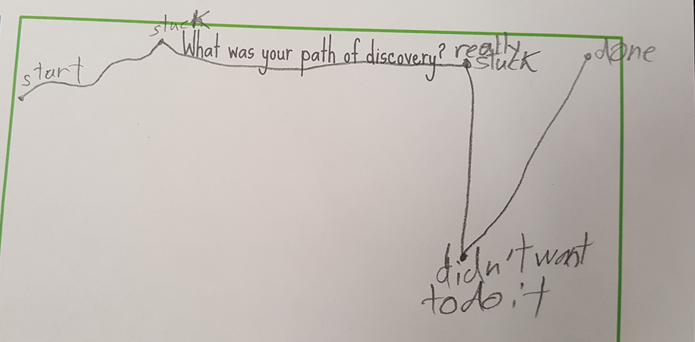
When our 6 weeks was up, I sat down with the students one last time for a bit of reflection and closure. I asked them to map out their path of progress because that was where a lot of the learning took place. I love how they expressed themselves.


So, it wasn’t a neat and organized process, but all students made forward progress. I would definitely try this again, and the fact that they had Special Needs just made us as teachers think even more flexibly. I learned some great lessons that I can take into my General Ed classroom next year! #studentchoice = #studentvoice